+886-3-571-6622 ext. 777
What is MES? What Manufacturing Processes Can It Manage?
MES (Manufacturing Execution System) is a software solution that actively collects and monitors production data from order receipt through to finished product — helping enterprises manage and control every step of the manufacturing process to ensure product quality.
Leveraging relational databases, graphical interfaces, and open architecture, MES integrates core business functions — including orders, suppliers, materials, production, equipment maintenance, and quality control — into a single platform. Real-time production data is delivered to users via web or notifications, with immediate alerts when exceptions occur on the floor. The goal: eliminate non-value-adding activities, improve processes, and boost overall production efficiency.
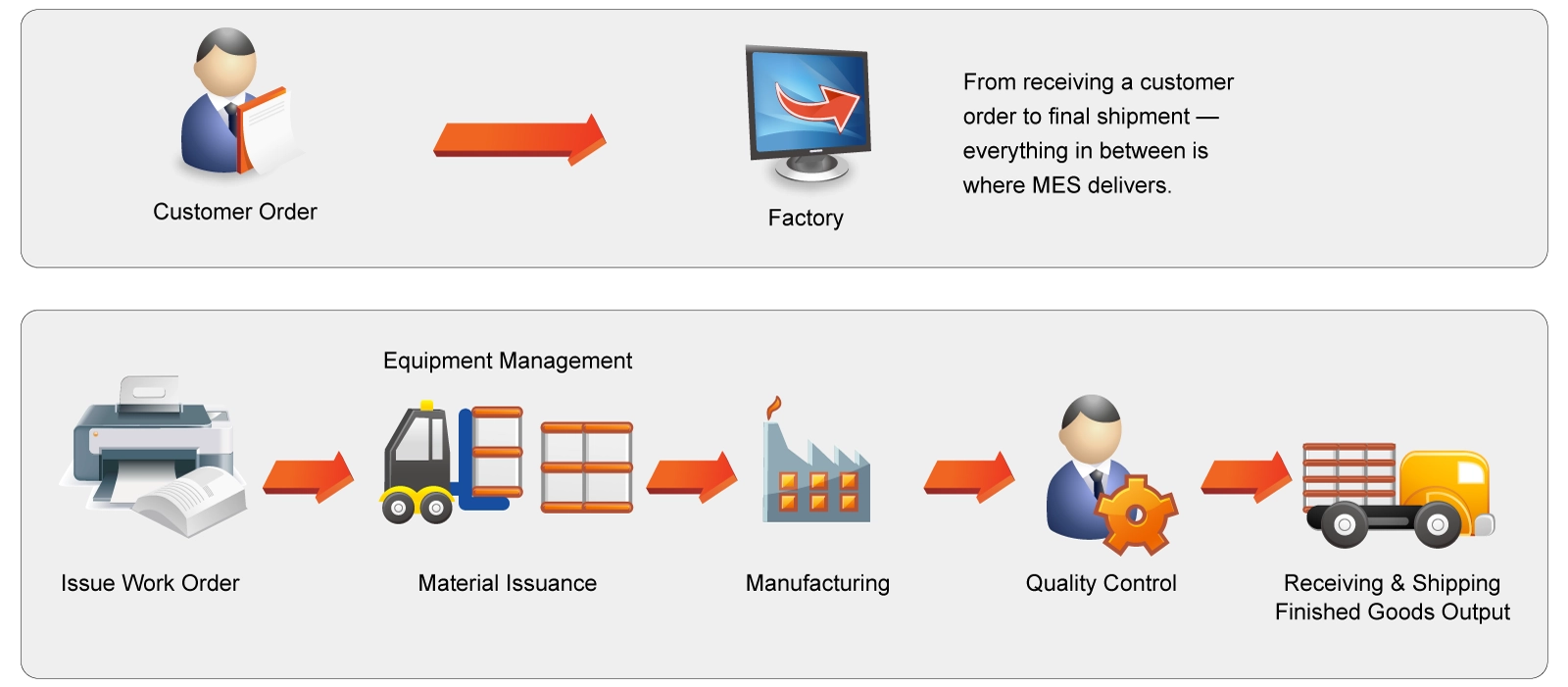
MES integrates the entire manufacturing flow — from work orders, production, and equipment management, to quality control, inventory, and shipping. It is the core of any manufacturing operation, managing every step from customer order to final delivery.
11 Core Functions of MES
The MESA International (Manufacturing Enterprise Solutions Association International) first introduced the MESA-11 model in 1997. This model provides a standardized framework for MES, defining how it operates across key areas of manufacturing — including production scheduling, quality management, data collection, and performance analysis — to help enterprises improve operational efficiency.
The MESA-11 functions are:
| 1. Resource Allocation & Status | Real-time tracking of resources (machines, materials, manpower) with dynamic optimization. |
|---|---|
| 2. Operations Scheduling | Plan activities and timelines based on priorities and resource capacity to maximize efficiency. |
| 3. Production Dispatching | Real-time adjustment of production workflows to respond quickly to demand changes. |
| 4. Document Management | Centralized management of production documents ensuring consistent access and version control. |
| 5. Data Collection & Acquisition | Track process and operational data to support decision-making and improve transparency. |
| 6. Labor Management | Plan factory workforce resources, optimize scheduling and qualification tracking. |
| 7. Quality Management | Monitor anomalies and strengthen quality control processes and documentation. |
| 8. Process Management | End-to-end tracking from order to finished product, establishing full traceability. |
| 9. Maintenance Management | Predict equipment issues and adjust maintenance plans to minimize downtime. |
| 10. Tracking & Genealogy | Record complete product history to meet regulatory and quality requirements. |
| 11. Performance Analysis | Compare results against targets and identify opportunities to improve production efficiency. |
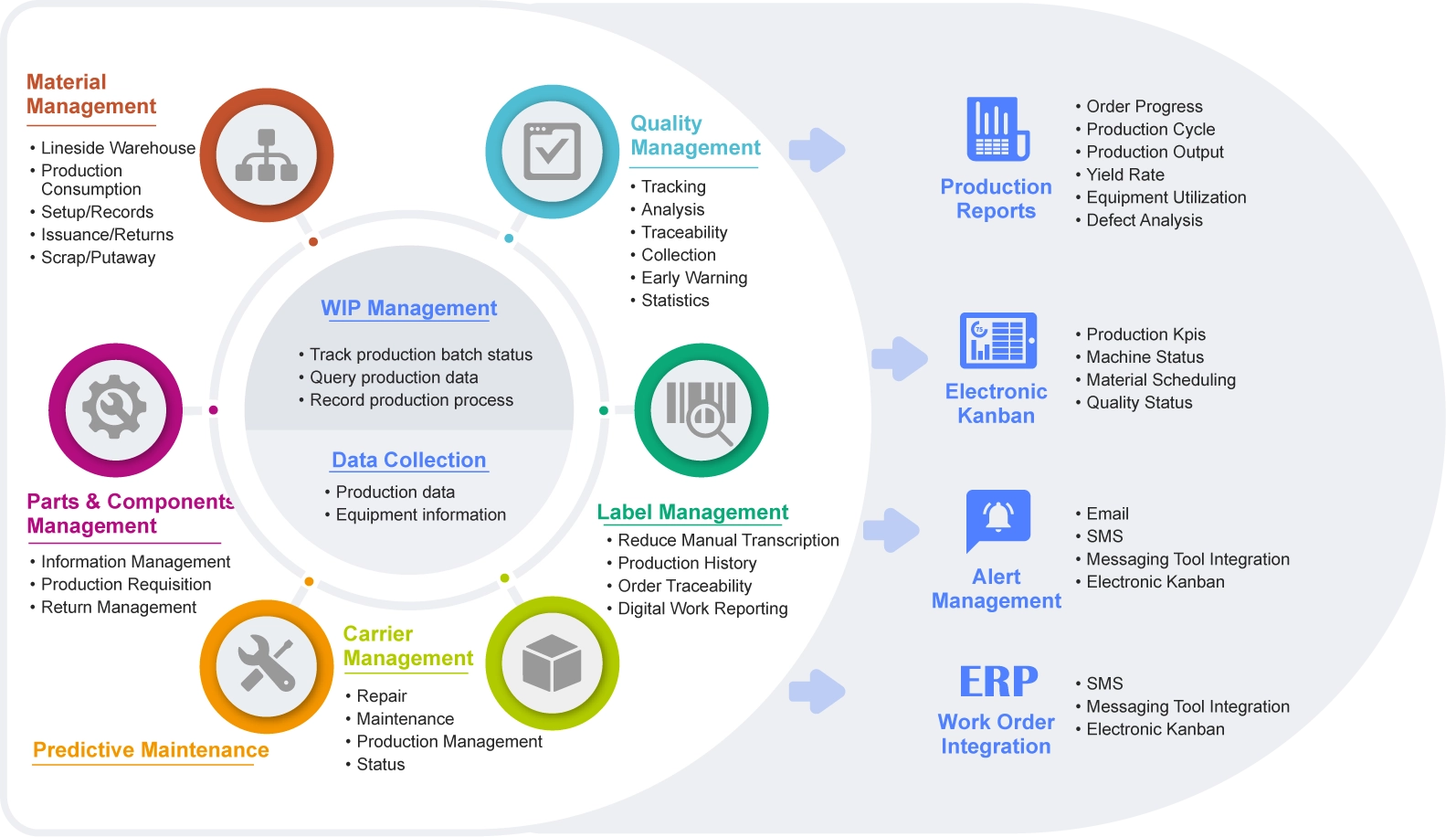
standardized process management, production traceability, quality control, material management, real-time WIP tracking, predictive maintenance, electronic kanban, and alert management. With ERP work order integration, MES improves manufacturing accuracy and accelerates decision-making.
6 Key Benefits of Implementing MES
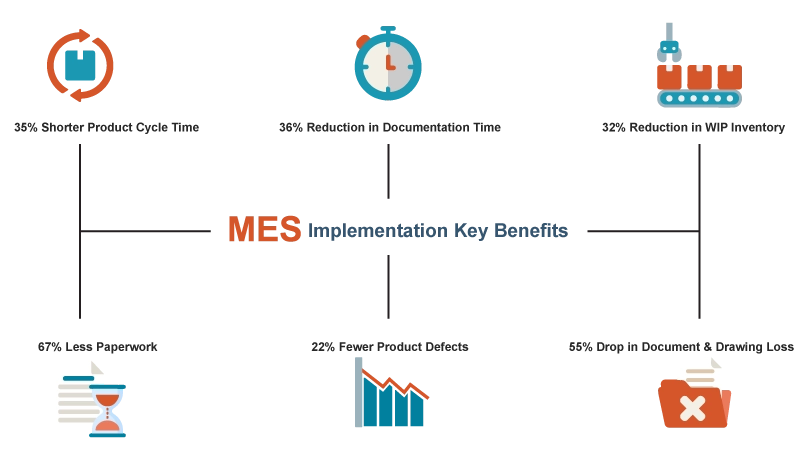
According to MESA International research, companies that implement MES can achieve the following measurable results:
| Product Cycle Time | 35% Shorter |
|---|---|
| Documentation Time | 36% Shorter |
| WIP Inventory | 32% Reduction |
| Paperwork | 67% Less (between shifts) |
| Product Defects | 22% Fewer |
| Document & Drawing Loss | 55% Drop |
MES System Integration Architecture
Based on the ISA-95 and IEC/ISO 62264 standards, this architecture illustrates how MES integrates with heterogeneous systems across the enterprise — guiding factories toward smart manufacturing.
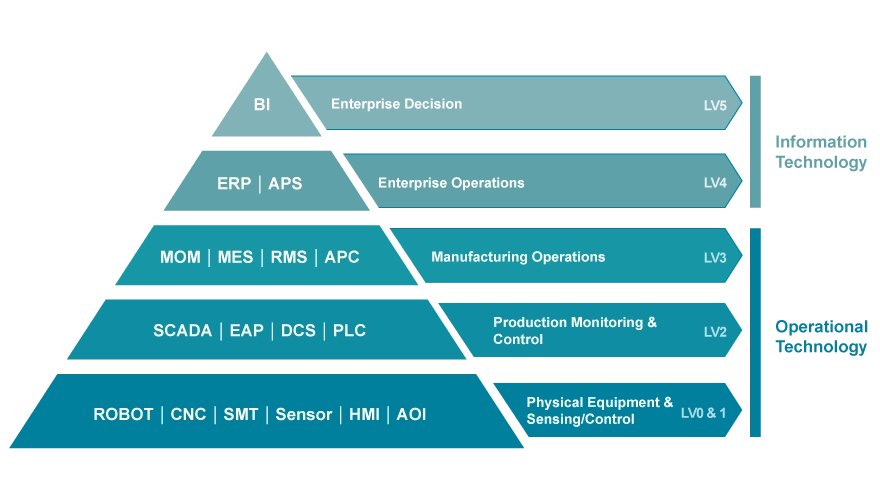
LV5 — Enterprise Decision Layer
BI and DSS systems consolidate data across all enterprise levels to support executive decision-making.
LV4 — Enterprise Operations Layer
ERP and APS systems manage operational status, capturing key data such as orders and sales, while integrating work orders and scheduling with MES.
LV3 — Manufacturing Operations Layer
Primarily MES — receives work orders from ERP, collects production data from factory equipment, and manages the entire production process.
LV2 — Production Monitoring & Control Layer
Beyond SCADA for plant-wide monitoring, EAP and BC act as bridges between equipment and MES, handling communication and partial process control.
LV0 & 1 — Physical Equipment & Sensing/Control Layer
The hardware layer itself — motors, CNC controllers, measurement devices, sensors, signal acquisition cards, HMI interfaces, and more.
What Factory Challenges Can MES Solve?
ERP Integration — Convert orders to work orders, analyze labor reporting, calculate personnel performance and costs, and sync finished goods back to ERP.

Real-Time Anomaly Response — Instant exception alerts, process traceability, and visual quality control dashboards.

Smart Data Collection — Sensor-based production line control with mobile devices to simplify data collection across different work environments.

Tool & Maintenance Management — Monitor tool lifespan and schedule preventive maintenance to avoid production losses from equipment failures.


Production Analytics — Detailed production records with analysis of key KPIs (capacity, yield, utilization, quality), SPC, and order tracking.

Material Verification — Pre-production material validation to prevent wrong material usage, protect quality consistency and brand reputation.

Automated Machine Data — Auto-transfer of machine data eliminates manual input, delivering real-time output and utilization rates.

Machine Integration — Collect equipment data to strengthen coordination between systems and machines.

How to Assess Your Factory's MES Needs
Factory resources — machines, workstations, production flows, and product data — can all be built into MES with access control, achieving the goal of higher productivity and lower costs. If you face any of the following challenges on the factory floor, MES is exactly what you need.
-
How many customer orders are open? Can we meet delivery deadlines? Do we have capacity for more?
-
Is WIP data up to date? Do we have clear visibility into production line inventory?
-
Are materials sufficiently stocked? Can semi-finished goods keep up with customer delivery schedules?
-
After quality inspections are recorded, can they be traced back during customer audits or factory reviews?
-
Can production anomalies be detected in real time? Are quality and yield targets being met?
-
Can factory equipment automatically report data for real-time output and utilization visibility?
-
Can experienced workers' knowledge be recorded and passed on to support smooth expansion and continuity?
-
Can factory operations integrate with ERP for easier production scheduling and accurate cost analysis?
Which Industries Need MES?
-
 Automotive / Auto PartsMES supports high-mix, low-volume automotive manufacturing with precise delivery control, real-time quality monitoring, lower production costs, and improved efficiency.
 -
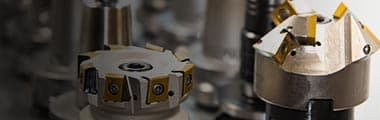 Metal ProcessingMES tooling management helps select the right tools to boost efficiency, while monitoring tool lifespan and scheduling maintenance to prevent quality issues.
 -
 Injection MoldingMES mold and material management enables pre-production verification checks, reducing error rates and preventing production losses.
 -
 LCDMES material management and automated data collection enable real-time optical inspection from glass cutting to final assembly, with SPC alerts to improve process yield.
 -
 LEDMES connects EPI, CHIP, and PKG production stages with wafer validation feedback and binning analysis, enabling end-to-end LED production management.
 -
 SemiconductorMES integrates with equipment for full automation — collecting, feeding back, and controlling machine data to precisely manage every step of production.